Nummular eczema: what the first consensus recommends
Coin-shaped, itchy patches: how the 2026 European consensus diagnoses and treats nummular eczema, how it differs from ringworm, and what is off-label in the US.
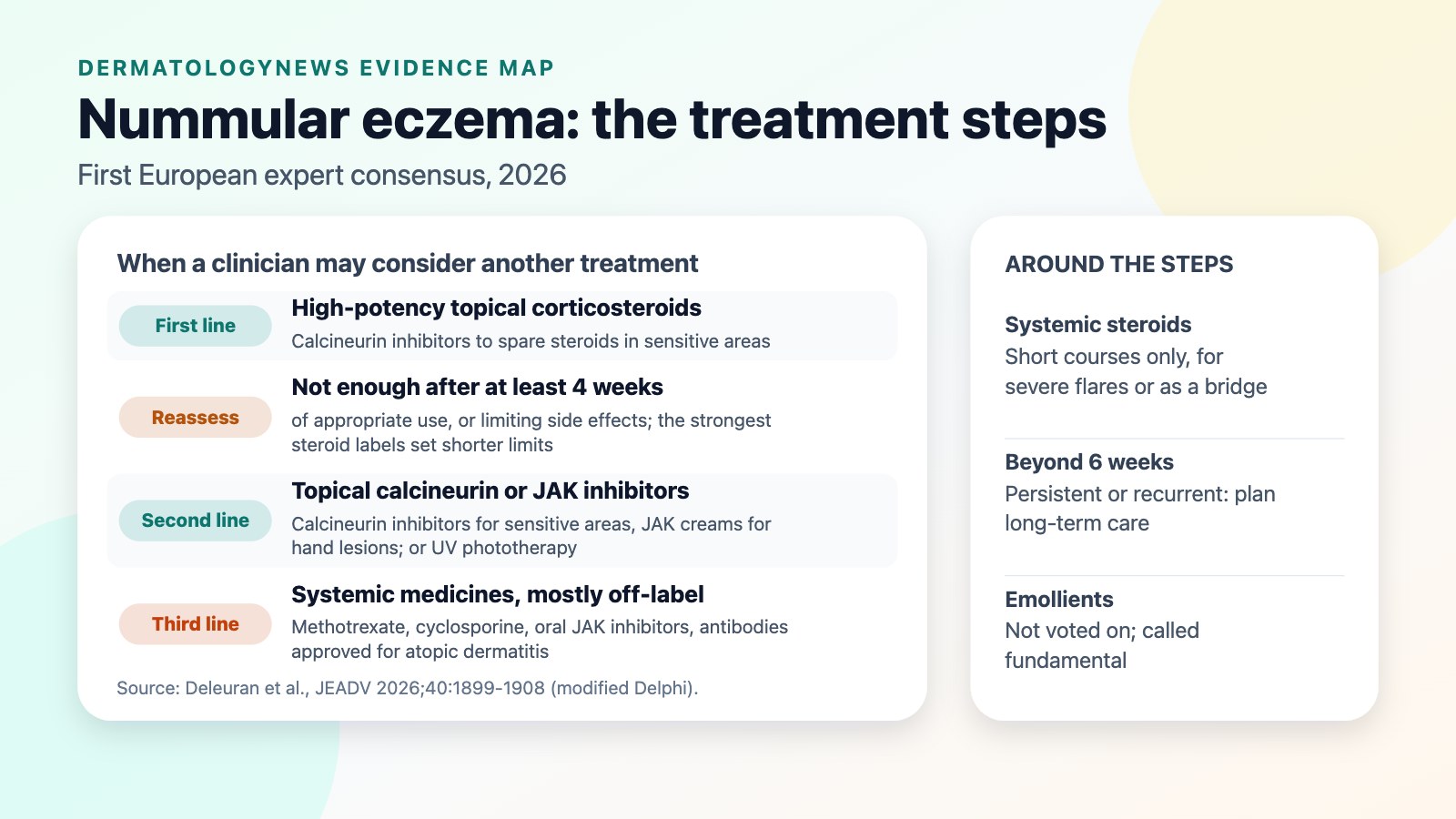
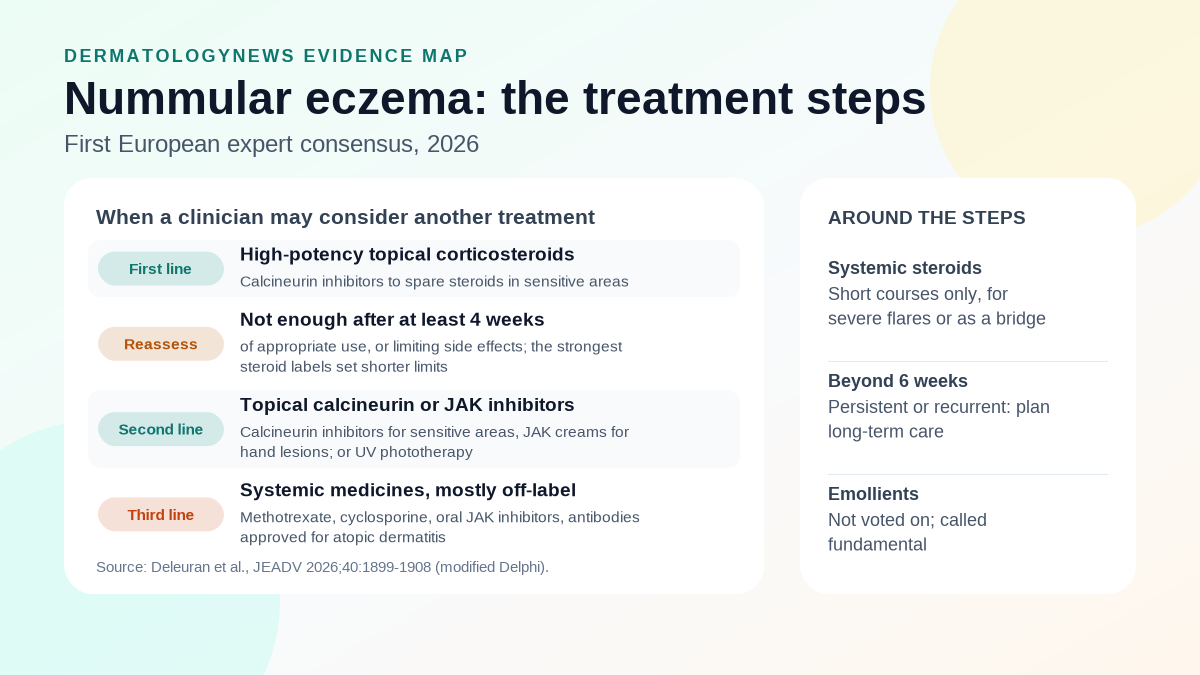
The first expert consensus on nummular eczema, developed by a European panel in 2026, recommends diagnosing it from its coin-shaped, intensely itchy patches and treating it in steps: high-potency topical steroids first, then calcineurin inhibitors, topical JAK inhibitors for the hands or phototherapy, and off-label systemic medicines only for selected hard-to-treat cases [1].
Nummular eczema is a chronic inflammatory skin disease with several well-defined, coin-shaped eczema patches, mostly on the arms and legs [1]. It is also called nummular dermatitis or discoid eczema; the consensus asks for the single name nummular eczema [1]. Its authors found no established clinical guidelines for the condition, and 85.5% of the 55 panel members who answered a baseline survey said their centers had no specific protocol or guideline for it [1]. The recommendations, published online in the Journal of the European Academy of Dermatology and Venereology on July 7, 2026, and in its December 2026 issue, come from a two-round modified Delphi vote. The panel had 63 eligible members, 60 dermatologists and 3 specialist nurses from 16 European countries; 47 voted in the first round and 44 in the second, and 49 of 64 statements reached consensus, 48 in agreement and one in disagreement [1].
What nummular eczema looks like and who gets it
The patches often start as tiny bumps and blister-like sores, sometimes after a scrape or bug bite, which crust over and join into raised, round to oval spots [2][3]. They are pink or red on lighter skin and brown on darker skin, and can also look lighter than the surrounding skin [3]. The itch can be intense and tends to worsen at rest or in bed, and the skin between the spots is often very dry [3]. The spots can last weeks or months, and as they clear they flatten, sometimes from the center first, and may leave flat discolored marks, more often in darker skin [3]. Nummular eczema is not contagious [2].
Prevalence estimates range from 0.1% to 9.1%, because there are no uniform diagnostic criteria [1]. Earlier data suggest two age peaks, a smaller one at 15 to 25 and a larger one at 55 to 65, with earlier onset in women [1]. German health-insurance claims put the coded prevalence at about 0.26% in 2022, or 0.07% under a stricter case definition; people with the diagnosis averaged 47.5 years of age and 57.4% were men [4]. Coded prevalence rose with age in adults, reaching 0.80% in older men, and was also high in children under 2, at 0.56% to 0.57%, which the authors say may partly reflect confusion with atopic dermatitis [4].
The American Academy of Dermatology (AAD) lists dry air, skin injury, intense stress, heat and humidity, skin infection, heavy drinking and medicines that dry the skin among common triggers [5]. Skin can become excessively dry in winter, when the humidity of the air drops [5]. Dry, itchy winter skin on the shins is covered in asteatotic eczema and winter itch.
How it differs from ringworm and atopic eczema
The consensus names tinea corporis (ringworm of the body), plaque psoriasis, pityriasis rosea, nummular contact dermatitis and stasis dermatitis as the main conditions to tell apart from nummular eczema [1].
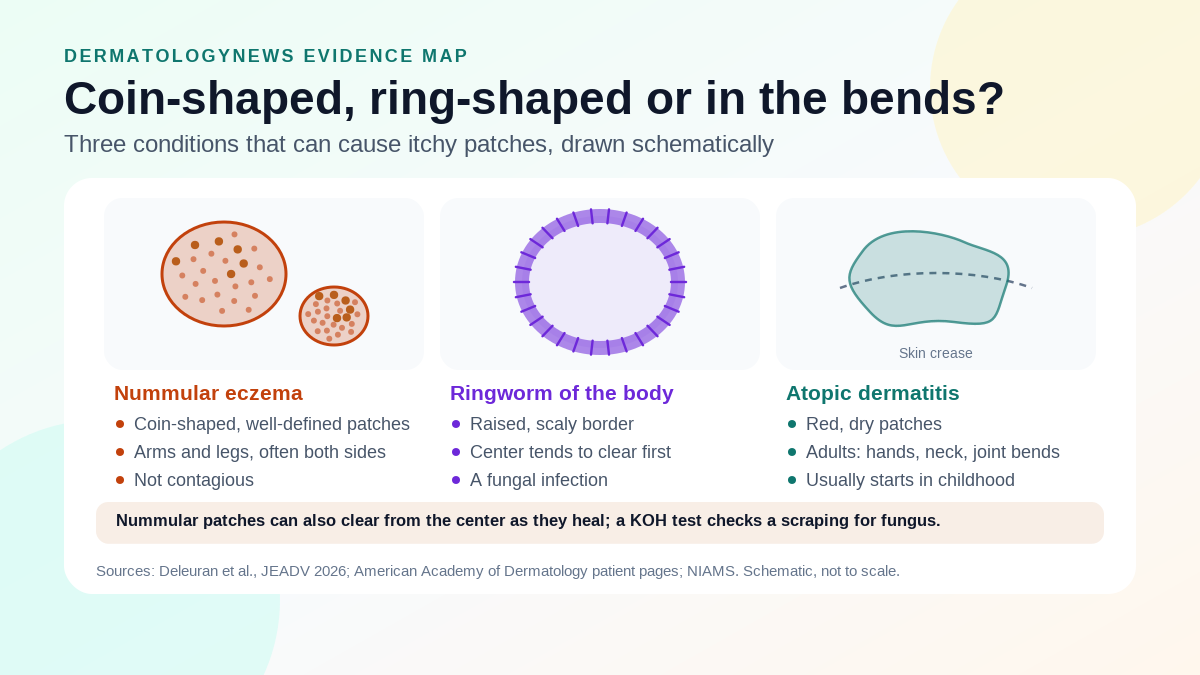
| Nummular eczema | Ringworm | Atopic dermatitis | |
|---|---|---|---|
| Type | Chronic, inflammatory, not contagious [1][2] | Fungal infection [6] | Chronic, inflammatory, not contagious [8] |
| Patches | Coin-shaped, well-defined, raised [1][3] | Raised, scaly border; center clears first [6] | Red, dry; may ooze, crust or thicken [8] |
| Sites | Arms and legs, often both sides [1] | Anywhere on the skin [6] | Teens and adults: hands, neck, elbow and knee bends [8] |
| Tests | KOH test or biopsy only in specific cases [1] | Scraping checked for fungus [7] | — |
Ringworm. Shape alone may not settle the question: ringworm patches tend to clear in the center first, and nummular eczema spots can do the same as they heal [3][6]. The consensus says a potassium hydroxide (KOH) examination to exclude a fungal infection may be useful in specific cases, but it is not a routine step [1]. For that test, a dermatologist scrapes off a little skin and looks for fungus under a microscope [7]. Ringworm is treated with antifungal medicine [7]; ringworm that does not clear with the usual antifungal tablets is covered in terbinafine-resistant tinea.
Atopic dermatitis. Atopic dermatitis usually begins in childhood and, in teens and adults, favors the hands, neck, the bends of the elbows and knees, the skin around the eyes, and the ankles and feet [8]. The consensus regards nummular eczema as its own condition that can occur with or without atopic dermatitis, and whose management may overlap with it [1]. In children, nummular eczema is often linked to atopy and has been called a variant of atopic dermatitis, but it usually appears later than classic infant eczema and leaves the skin between patches normal [1]. In adults, it can share features with psoriasis, and contact allergies are more frequent [1]. In the German claims data, 18% of people with nummular eczema also had an atopic dermatitis diagnosis in the same year [4].
Diagnosis and assessment: what the consensus agreed
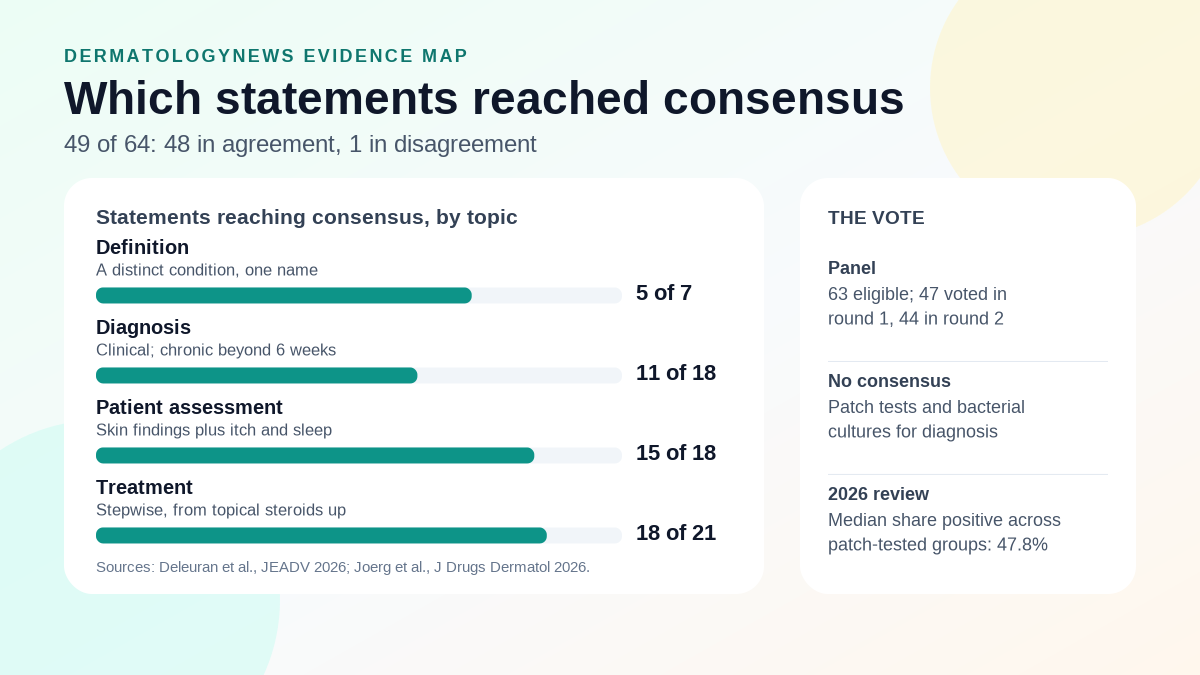
The panel agreed that [1]:
- Diagnosis is clinical. It rests on signs and symptoms, without routine tests: multiple well-defined, coin-shaped eczema patches that itch intensely, usually on both sides of the body and mainly on the arms and legs.
- Bacteria on the skin are not the same as infection. Staphylococcus aureus frequently colonizes the patches, and this should be told apart from an active skin infection.
- Biopsy is for unusual cases. It is reserved for atypical, treatment-refractory or suspected-infection presentations.
- More than 6 weeks means chronic. Symptoms that persist or recur for longer than 6 weeks should be managed as a chronic condition, with long-term maintenance in mind.
- Assessment covers both skin and person. Clinicians can use an overall severity score adapted to nummular eczema, alongside the extent of the rash, the number of active patches and scratch marks, and the patient's own reports of itch, sleep loss and quality of life, until tools specific to nummular eczema are validated. An unadapted Investigator's Global Assessment did not reach consensus; an adapted one did.
- Scores built for other diseases were rejected. The one statement that reached consensus in disagreement was that scores designed for other inflammatory skin diseases, such as the Eczema Area and Severity Index (EASI), are appropriate for nummular eczema.
Patch testing and bacterial skin cultures did not reach consensus as diagnostic tools after two rounds of voting [1]. A separate 2026 systematic review pooled 10 observational studies of patients with nummular eczema who were patch tested: across those study groups, the median proportion with a positive result was 47.8% (range 26.7% to 56.0%), and the most frequently reported allergens included nickel, potassium dichromate, cobalt chloride, fragrance mix and neomycin [9]. In the studies that reported it, a median 33.5% had current or past allergic contact dermatitis [9]. A positive test shows sensitization, not that the allergen causes the rash. The review suggests patch testing in severe or treatment-refractory nummular eczema to find clinically relevant allergens, and notes that it is unclear whether contact sensitization causes the eczema, aggravates it or simply occurs alongside it [9].
Treatment step by step
The consensus treats nummular eczema as a frequently chronic condition that needs long-term management, with decisions to step up guided by both the clinical findings and what the patient reports [1].
| Step | What the consensus recommends [1] |
|---|---|
| Basic care | Skin care and emollients were not voted on but "remain fundamental to routine management" |
| First line | High-potency topical corticosteroids; topical calcineurin inhibitors as steroid-sparing treatment in sensitive areas |
| When to reconsider | The panel counts not enough effect after at least 4 weeks of appropriate use, or significant side effects, as failure of topical steroids |
| Second line, after a suboptimal response to topical steroids | Topical calcineurin inhibitors for sensitive areas and topical JAK inhibitors for hand lesions, both considered early; phototherapy |
| Systemic corticosteroids | Short-term only: a bridge during a change of treatment or rapid control of an acute, severe flare, not long-term maintenance |
| Third line | Methotrexate, cyclosporine, oral JAK inhibitors and monoclonal antibodies approved for atopic dermatitis, off-label in most settings, for highly selected refractory cases and after a thorough discussion with the patient |
Open the treatment-steps figure at full size
The 4-week mark is the panel's definition of an inadequate response, for the clinician to judge; the consensus addresses which options are appropriate, not doses or how often to apply them, which it leaves to established dermatological standards, product information and individual needs [1]. Labels of the strongest steroids set shorter limits: the clobetasol propionate cream 0.05% label does not recommend treatment beyond 2 consecutive weeks and says that if there is no improvement within 2 weeks, the diagnosis may need to be reassessed [12]. The consensus did not choose a type of phototherapy, though it notes that narrowband UVB will often be preferred in practice [1]. For daily skin care, the AAD advises a fragrance-free, hypoallergenic moisturizing cream or ointment rather than a lotion, applied to damp skin after every bath, shower and handwashing [11].
The third-line options rest on low-to-moderate certainty evidence, largely extrapolated from atopic dermatitis trials and small nummular eczema case series [1]. For methotrexate, the panel cites two case series in children whose moderate to severe nummular eczema had not responded to earlier treatment [1]. Oral JAK inhibitors and cyclosporine are supported mainly by atopic dermatitis trials [1]. For dupilumab, it cites observational reports, several in atopic dermatitis with coin-shaped lesions [1]: in a multicenter series of 30 adults with nummular-like atopic dermatitis, EASI, itch and quality-of-life (DLQI) scores improved over 16 weeks [24], and in a chart review of 14 children with a nummular phenotype of atopic dermatitis, 12 improved clinically [25].
DUPINUM, a randomized trial of dupilumab. In this investigator-initiated, double-blind phase 2 trial at two German centers, 70 adults with biopsy-confirmed nummular eczema received dupilumab (36) or placebo (34) for 16 weeks, with a topical steroid as background treatment [22]. The main outcome, the percent fall in the EASI score, was 62.0% with dupilumab and 59.5% with placebo, a difference that was not statistically significant (p = 0.732) [22]. In exploratory secondary analyses, improvement in the physician's global rating (40.0% vs 17.2%) and the fall in itch favored dupilumab, while quality of life and the share reaching a 50% EASI improvement did not differ significantly [22]. The sponsor notes that the trial was sized for a larger effect taken from atopic dermatitis studies and may have missed a smaller but meaningful one; one serious adverse event occurred in each group, neither related to treatment [22]. These results come from the summary that the sponsor, the Klinikum rechts der Isar of the Technical University of Munich, submitted to the EU clinical trials register in July 2026; the ClinicalTrials.gov record shows no results [22][23].
What a 2026 review of newer medicines found
A systematic review of biologics and small-molecule inhibitors, published in the October 2026 Journal of Drugs in Dermatology, found 10 eligible studies among 219 [10]. It gave dupilumab and tralokinumab a grade B recommendation in favor, roflumilast and delgocitinib grade C in favor, and apremilast grade B against [10]. Its authors would reserve roflumilast and delgocitinib for selected cases, do not recommend apremilast, and conclude that randomized controlled trials are needed to establish optimal treatment [10]. Its literature search ran on October 29, 2025, before the DUPINUM results were submitted in July 2026, so its grades reflect the evidence available then [10][22]. The dupilumab side effects and delgocitinib articles cover those drugs' labels and trials in their approved uses.
What is approved in the US, and what is off-label
The panel voted on drug classes, not on individual products, and its topical JAK statement concerned hand lesions after a suboptimal response to topical steroids [1]. None of the 10 US product labels checked in November 2026, for examples from those classes, specifically names nummular eczema. The clobetasol cream label covers corticosteroid-responsive skin conditions in general; the others are labeled for named conditions such as atopic dermatitis, chronic hand eczema, psoriasis or rheumatoid arthritis. Prescribing the other medicines below for nummular eczema is off-label in the US, unless the patient also has a condition on the drug's label, such as atopic dermatitis or, for delgocitinib, chronic hand eczema, for which it can be prescribed. The consensus calls its third-line systemic options off-label in most settings [1].
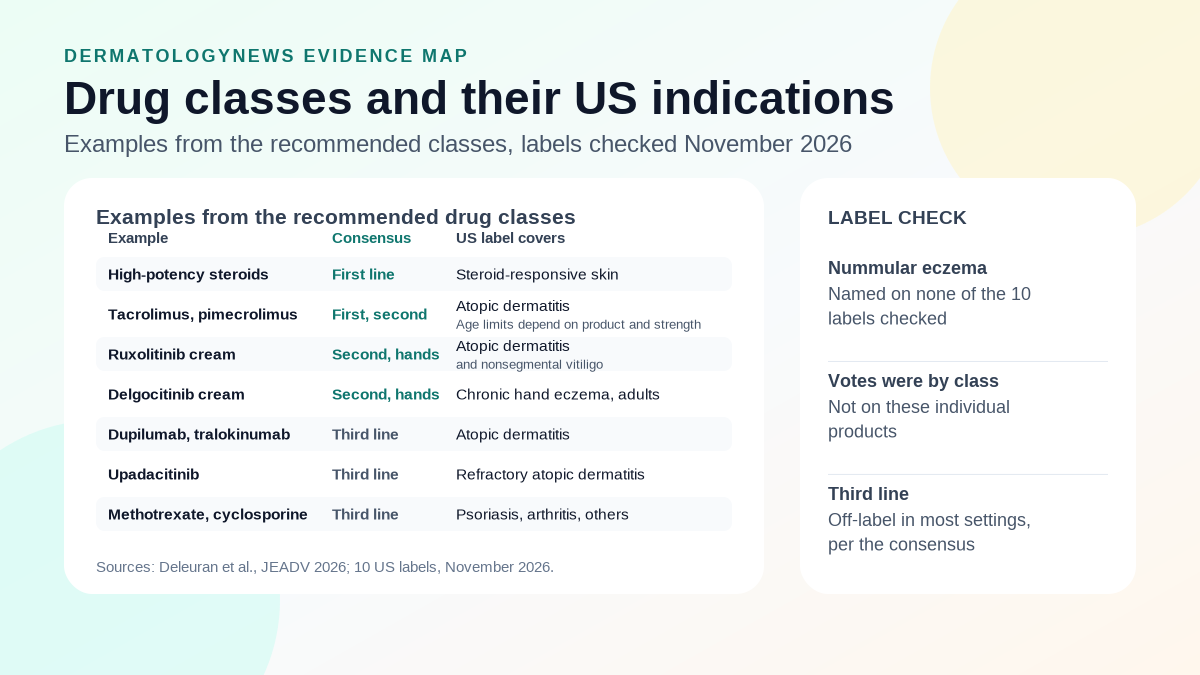
- Topical corticosteroids. The clobetasol propionate cream 0.05% label covers "the relief of the inflammatory and pruritic manifestations of corticosteroid-responsive dermatoses" [12].
- Topical calcineurin inhibitors. Tacrolimus ointment is labeled as second-line, short-term or non-continuous chronic treatment of moderate to severe atopic dermatitis in non-immunocompromised patients: both strengths for adults, and only the 0.03% ointment for children aged 2 to 15 [13]. Pimecrolimus cream is labeled the same way for mild to moderate atopic dermatitis in non-immunocompromised patients from age 2 [14].
- Topical JAK inhibitors. Ruxolitinib cream (Opzelura) is labeled for short-term and non-continuous chronic treatment of mild to moderate atopic dermatitis in non-immunocompromised patients from age 2 whose disease is not adequately controlled with topical prescription therapies, or when those therapies are not advisable, and for nonsegmental vitiligo from age 12 [15]. Delgocitinib cream (Anzupgo) is labeled for moderate to severe chronic hand eczema in adults who have had an inadequate response to topical corticosteroids, or for whom they are not advisable [16].
- Monoclonal antibodies. Dupilumab (Dupixent) is labeled for moderate-to-severe atopic dermatitis from 6 months of age, and tralokinumab (Adbry) from age 12, when topical prescription therapies have not controlled it or are not advisable [17][18]. Others are reviewed in lebrikizumab and nemolizumab for atopic dermatitis.
- Oral JAK inhibitors. Upadacitinib (Rinvoq) is labeled for refractory, moderate to severe atopic dermatitis from age 12 when other systemic drugs, including biologics, have not controlled it or are inadvisable [19].
- Methotrexate and cyclosporine. Methotrexate tablets are labeled for severe psoriasis and rheumatoid arthritis in adults, polyarticular juvenile idiopathic arthritis and certain cancers [20]. Neoral (cyclosporine) is labeled for severe, recalcitrant plaque psoriasis in non-immunocompromised adults who have not responded to at least one systemic therapy or cannot use others, for severe active rheumatoid arthritis that has not responded adequately to methotrexate, and for preventing rejection of kidney, liver and heart transplants [21].
Adverse events, limitations and realistic expectations
- Expert opinion, not trial evidence. The recommendations come from a Delphi vote, not a formal grading of evidence such as GRADE [1]. The authors also list uneven representation of countries, a survey in English that was not most panelists' first language, and no patient participation despite attempts to include patient associations [1].
- Funding. Almirall funded the study and paid for its project management, medical writing and statistical support; the authors state that the funder had no role in item wording, panel selection, voting, data handling or consensus decisions [1]. Each of the six authors reports a financial relationship with Almirall, and most also with other drug companies [1].
- Topical corticosteroids. The clobetasol propionate cream label warns that steroid absorbed through the skin can suppress the body's own steroid production, does not recommend use under age 12, advises against use on the face, groin or armpits and lists skin atrophy among less frequent side effects [12].
- Calcineurin inhibitors. Tacrolimus and pimecrolimus carry a boxed warning that their long-term safety has not been established: rare cases of skin cancer and lymphoma have been reported, without a proven causal link, and continuous long-term use should be avoided [13][14].
- JAK inhibitors. Ruxolitinib cream carries the class boxed warning for serious infections, mortality, malignancy, major adverse cardiovascular events and thrombosis [15]. The upadacitinib label, revised in November 2026, carries the same boxed warning and adds that cerebral venous thrombosis has occurred with JAK inhibitors, including upadacitinib [19]. Delgocitinib cream has no boxed warning; its label warns about serious infections and non-melanoma skin cancers and says it is not known whether delgocitinib carries the risks seen with JAK inhibition, several of which come from a large trial of an oral JAK inhibitor in people with rheumatoid arthritis aged 50 or older with a cardiovascular risk factor [16].
- Methotrexate and cyclosporine. Methotrexate carries a boxed warning for embryo-fetal toxicity, including fetal death, serious adverse reactions, including death, and deaths when tablets were taken daily by mistake; it is contraindicated in pregnancy for non-cancer conditions [20]. Cyclosporine's boxed warning says it may increase susceptibility to infection and neoplasia, and that in psoriasis it can cause high blood pressure and kidney toxicity, so kidney function must be monitored during treatment [21].
- Realistic expectations. According to the AAD, nummular eczema caught early and treated properly can heal within 3 to 4 weeks, but it can return, often in the same place [2]. The consensus has not yet defined treatment response targets or long-term disease control for nummular eczema and calls for large randomized trials of systemic therapies [1].
When to see a dermatologist
- Round, itchy patches that have not been diagnosed. Ringworm and psoriasis can look like nummular eczema, and a dermatologist can tell the difference [2].
- Signs of infection. Yellow or golden crusts, red or brown streaks, swelling, pus or tenderness call for immediate medical care, according to the AAD [3].
- Prescribed treatment not working, or troublesome side effects. Contact the clinician who prescribed it. The panel counts not enough effect after at least 4 weeks of appropriate use of a high-potency topical steroid as failure, and the clobetasol cream label says the diagnosis may need reassessing if there is no improvement within 2 weeks [1][12].
- Patches that last or keep coming back. Beyond 6 weeks, the consensus advises a long-term maintenance plan [1].
- Itch that feels unbearable or disturbs sleep. The AAD advises seeing a dermatologist when the itch feels unbearable, and the consensus counts itch and lost sleep in assessing severity [1][11].
Questions to ask at the appointment
- Could this be ringworm or psoriasis instead, and is a KOH test or biopsy needed [1]?
- Which topical steroid should I use, where on my body, and for how long [1][12]?
- If the patches come back, what is my long-term maintenance plan [1]?
- Would patch testing for a contact allergy help in my case [1][9]?
- If I need a systemic medicine, what is its label status and what monitoring does it require [1][17][19][20][21]?
Bottom line
The 2026 European consensus, the first for nummular eczema, recommends diagnosing it by examination, managing it as a chronic condition once symptoms last beyond 6 weeks, and treating in steps: high-potency topical corticosteroids first, then topical calcineurin inhibitors, topical JAK inhibitors for the hands or phototherapy, with systemic steroids only in short courses for severe flares or as a bridge, and off-label systemic medicines reserved for selected refractory cases [1]. The recommendations are expert opinion from a study that received funding from a drug company, and the evidence for systemic options is limited: in the randomized DUPINUM trial, dupilumab did not beat placebo on its main outcome [1][22]. Ringworm can look similar, and a KOH test can check for fungus [1][7].
Common questions
- What is nummular eczema?
- Nummular eczema is a chronic inflammatory skin disease with several well-defined, coin-shaped, intensely itchy patches, mostly on the arms and legs and often on both sides of the body [1]. It is not contagious [2]. The first European expert consensus, published in 2026, regards it as a condition distinct from atopic dermatitis that can occur with or without it [1].
- How can you tell nummular eczema from ringworm?
- Both can cause round, itchy patches, and in both the center of a patch can clear first [3][6]. Ringworm is a fungal infection whose patches are usually flat with a raised, scaly border [6]. When the two cannot be told apart by looking, a dermatologist can scrape a little skin and check it for fungus under a microscope, a KOH test [1][7].
- What is the first-line treatment for nummular eczema?
- The 2026 consensus recommends high-potency topical corticosteroids first [1]. Its panel counts not enough effect after at least 4 weeks of appropriate use, or side effects that limit treatment, as failure, after which a clinician may consider topical calcineurin inhibitors, topical JAK inhibitors for hand lesions or phototherapy [1]. Labels can set shorter limits: the clobetasol propionate cream 0.05% label does not recommend more than 2 consecutive weeks of treatment [12]. Anyone whose prescribed treatment is not working or causes troublesome side effects should contact the clinician who prescribed it.
- Are the medicines the consensus recommends FDA-approved for nummular eczema?
- None of the 10 US product labels checked in November 2026, for examples from the drug classes the consensus recommends, specifically names nummular eczema. The clobetasol cream label covers corticosteroid-responsive skin conditions in general, and the others are labeled for conditions such as atopic dermatitis, chronic hand eczema or psoriasis [12][13][14][15][16][17][18][19][20][21]. The consensus calls its third-line systemic options off-label in most settings [1].
- Does dupilumab work for nummular eczema?
- In the randomized, placebo-controlled DUPINUM trial, 70 adults with nummular eczema received dupilumab or placebo for 16 weeks; the main severity score fell by 62.0% and 59.5%, a difference that was not statistically significant, according to the results summary submitted by the trial's sponsor, a Munich university hospital [22]. Itch and a physician's global rating improved more with dupilumab in exploratory analyses, and the sponsor notes that the trial may have been too small to detect a smaller benefit [22]. Earlier reports were observational, mostly in atopic dermatitis with coin-shaped lesions [1][24][25]. Dupixent's US label covers moderate-to-severe atopic dermatitis, not nummular eczema [17].
References
- Deleuran M, Eyerich K, de Bruin-Weller M, Herranz-Pinto P, Ferrucci S, Weidinger S. European consensus recommendations for nummular eczema: A modified Delphi study. — Journal of the European Academy of Dermatology and Venereology, 2026;40(12):1899-1908 (published online July 7, 2026; sponsor: Almirall) · PMID: 42411804 · DOI: 10.1111/jdv.70560
- American Academy of Dermatology. Eczema types: Nummular eczema overview. — American Academy of Dermatology patient information, last updated March 15, 2021
- American Academy of Dermatology. Nummular eczema: Signs and symptoms. — American Academy of Dermatology patient information, last updated March 15, 2021
- Hagenström K, Müller K, Klinger T, Willers C, Eyerich K, Augustin M. Epidemiology of nummular eczema: methodological approaches and outcomes from nationwide claims data analyses. — Journal der Deutschen Dermatologischen Gesellschaft, 2026;24(7):886-893 (published online November 16, 2025) · PMID: 41243467 · DOI: 10.1111/ddg.15932
- American Academy of Dermatology. Nummular eczema: Causes. — American Academy of Dermatology patient information, last updated March 15, 2021
- American Academy of Dermatology. Ringworm: Signs and symptoms. — American Academy of Dermatology patient information
- American Academy of Dermatology. Ringworm: Diagnosis and treatment. — American Academy of Dermatology patient information
- National Institute of Arthritis and Musculoskeletal and Skin Diseases. Atopic dermatitis. — National Institutes of Health, last reviewed November 2022
- Joerg L, Stolyar J, Jagdeo J. Contact Allergens Associated With Nummular Eczema: A Systematic Review. — Journal of Drugs in Dermatology, 2026;25(10):914-918 (published online September 24, 2026) · PMID: 42826143 · DOI: 10.36849/JDD.10209
- Joerg L, Stolyar J, Jagdeo J. Biologics and Small-Molecule Inhibitors for the Treatment of Nummular Eczema: A Systematic Review. — Journal of Drugs in Dermatology, 2026;25(10):919-924 (published online September 17, 2026) · PMID: 42826139 · DOI: 10.36849/JDD.9756
- American Academy of Dermatology. Nummular eczema: Self-care. — American Academy of Dermatology patient information, last updated March 15, 2021
- Clobetasol propionate cream USP, 0.05%. US Prescribing Information. — Lupin Pharmaceuticals, FDA-approved labeling via DailyMed (U.S. National Library of Medicine); effective October 14, 2025, SPL version 8
- Tacrolimus ointment 0.03% and 0.1%. US Prescribing Information. — E. Fougera & Co., FDA-approved labeling via DailyMed (U.S. National Library of Medicine); effective January 28, 2026, SPL version 13
- Pimecrolimus cream, 1%. US Prescribing Information. — Oceanside Pharmaceuticals, FDA-approved labeling via DailyMed (U.S. National Library of Medicine); effective April 30, 2026, SPL version 4
- OPZELURA (ruxolitinib) cream, for topical use. US Prescribing Information. — Incyte, FDA-approved labeling via DailyMed (U.S. National Library of Medicine); revised June 2026, SPL version 14
- ANZUPGO (delgocitinib) cream, for topical use. US Prescribing Information. — LEO Pharma, FDA-approved labeling via DailyMed (U.S. National Library of Medicine); effective November 13, 2026, SPL version 7
- DUPIXENT (dupilumab) injection, for subcutaneous use. US Prescribing Information. — Sanofi-Aventis U.S., FDA-approved labeling via DailyMed (U.S. National Library of Medicine); effective April 22, 2026, SPL version 60
- ADBRY (tralokinumab-ldrm) injection, for subcutaneous use. US Prescribing Information. — LEO Pharma, FDA-approved labeling via DailyMed (U.S. National Library of Medicine); effective December 17, 2025, SPL version 15
- RINVOQ (upadacitinib) extended-release tablets and RINVOQ LQ oral solution. US Prescribing Information. — AbbVie, FDA-approved prescribing information; revised November 2026
- Methotrexate tablets. US Prescribing Information. — Alembic Pharmaceuticals, FDA-approved labeling via DailyMed (U.S. National Library of Medicine); effective May 18, 2026, SPL version 6
- NEORAL (cyclosporine capsules and oral solution, USP) MODIFIED. US Prescribing Information. — Novartis, FDA-approved labeling via DailyMed (U.S. National Library of Medicine); effective August 10, 2026, SPL version 30
- Klinikum rechts der Isar der Technischen Universität München. Summary of results DUPINUM: an investigator-initiated, multi-centre, randomized, double-blind, placebo-controlled study of dupilumab to demonstrate efficacy in subjects with nummular eczema. — EU Clinical Trials Information System, trial 2024-515534-32-00; sponsor's summary of results, version 1.0 dated July 6, 2026, submitted July 9, 2026
- Study of Dupilumab to Demonstrate Efficacy in Subjects With Nummular Eczema (DUPINUM). NCT04600362. — ClinicalTrials.gov record, last updated September 23, 2025; no results posted
- Patruno C, Stingeni L, Hansel K, et al. Effectiveness of dupilumab for the treatment of nummular eczema phenotype of atopic dermatitis in adults. — Dermatologic Therapy, 2020;33(3):e13290 · PMID: 32125741 · DOI: 10.1111/dth.13290
- Kim EJ, Hlobik M, Ho T. Effectiveness of dupilumab in pediatric patients with a nummular phenotype of atopic dermatitis. — Pediatric Dermatology, 2024;41(3):455-457 · PMID: 38303143 · DOI: 10.1111/pde.15541