Baby eczema: what the AAD's 2026 guidelines recommend
What the AAD's 2026 pediatric eczema guidelines recommend, the youngest US-approved age for each medicine, and what trials of moisturizing newborns found.
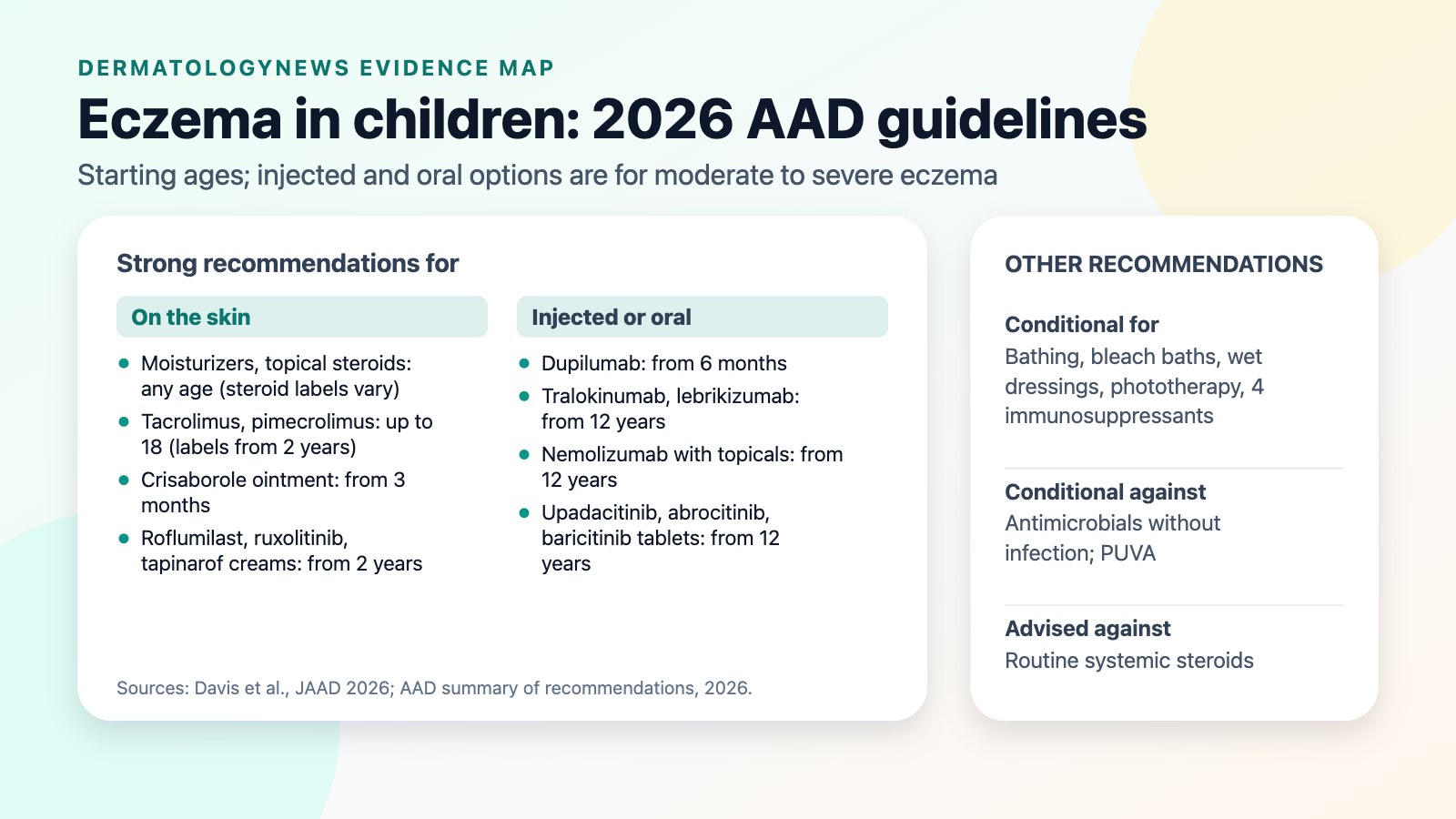
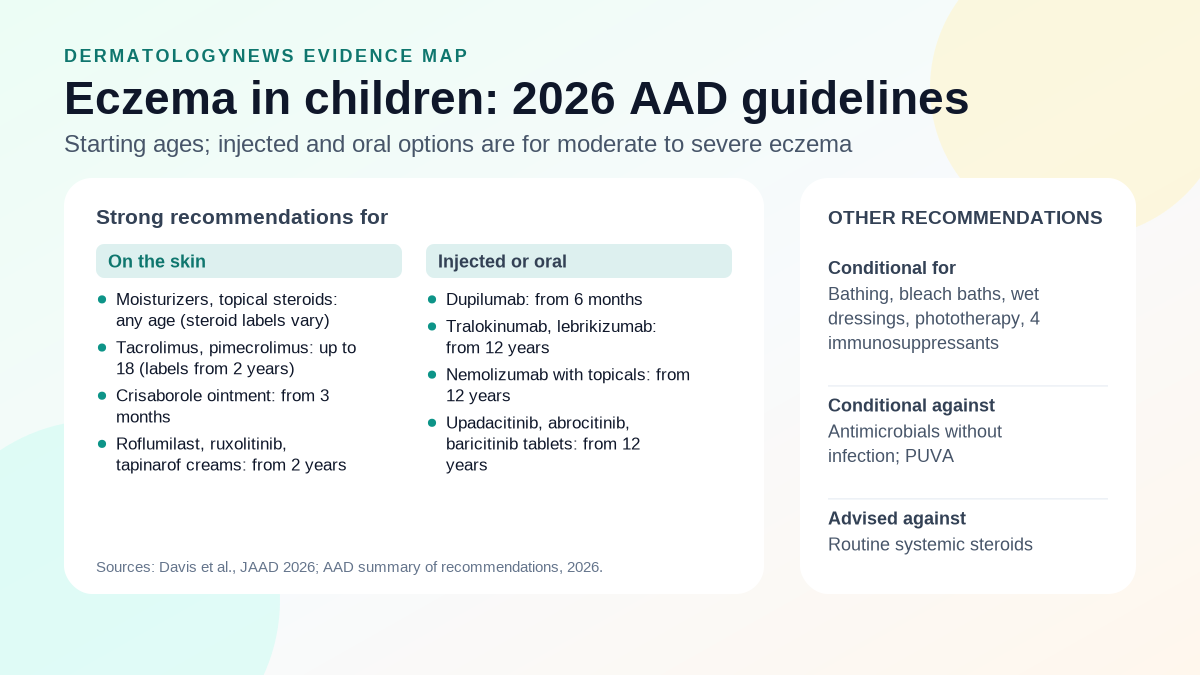
For baby eczema, the American Academy of Dermatology's 2026 guidelines strongly recommend moisturizers and topical corticosteroids [1][2]. Crisaborole ointment is recommended from 3 months for mild to moderate eczema and dupilumab from 6 months for moderate to severe eczema, in line with US labels; the other three biologics and the JAK inhibitor tablets are recommended from age 12 [2][3][4].
Baby eczema is atopic dermatitis in infancy. It causes itchy, dry or scaly skin, a pink, red, purple or brown rash and small bumps, usually on the cheeks and around the mouth, the neck folds, scalp, trunk and the outer arms and legs, and it typically spares the diaper area [5]. The American Academy of Dermatology (AAD) published its first guidelines for eczema in children and adolescents online on April 7, 2026, in two parts in the Journal of the American Academy of Dermatology [1][6][7]. The treatment paper reports 27 recommendations, 26 graded and one good practice statement; the prevention paper reports 14 recommendations and reviews conditions that occur alongside eczema [1][2][6]. The work group rated the evidence with the GRADE approach [1][6].
What do strong and conditional recommendations mean?
A strong recommendation means the benefits clearly outweigh the risks and burdens, and it applies to most children with eczema in most circumstances [7][8]. A conditional recommendation means benefits are finely balanced with risks and burdens: it applies to most patients, but the most appropriate choice may differ from one child to the next [7][8]. Each recommendation also carries a certainty rating for its evidence, from high to very low [2]. A recommendation is not an FDA approval. The US label of each medicine sets the ages and conditions it is approved for.
Open the recommendations figure at full size
Daily skin care: moisturizer, bathing and wet wraps
The guideline strongly recommends moisturizers for children with eczema (moderate certainty), without recommending a particular product or ingredient [2]. It conditionally recommends bathing (very low certainty), dilute bleach baths under the guidance of a clinician skilled in eczema care (very low certainty) and wet dressings under the same guidance (low certainty), the last typically during flares [2]. For babies, the AAD's patient advice is to choose skin care products labeled hypoallergenic and fragrance-free, to avoid "unscented" products, which can still contain fragrance, and to avoid products with many plant-based ingredients such as essential oils [5]. For some babies, regular moisturizing and bathing may be the only treatment needed [5].
Which eczema medicines are approved for babies and children?
The tables set each AAD recommendation, with its strength, certainty and age, against the US label for atopic dermatitis, checked in November 2026. When a child is younger than the age on a medicine's label, or does not meet its other conditions, its use is off-label, even when the guideline recommends the medicine.
Treatments applied to the skin
| Medicine | AAD recommendation [2] | US label for atopic dermatitis |
|---|---|---|
| Topical corticosteroids | Strong, moderate certainty; up to age 18 | Varies by product: drugstore hydrocortisone 1%, ask a doctor under 2; fluticasone propionate cream 0.05%, from 3 months; clobetasol propionate cream, not under 12 [9][10][11] |
| Pimecrolimus cream 1% | Strong, moderate; up to age 18 | 2 years; mild to moderate; after other prescription topicals, or when they are unsuitable; not for a weakened immune system [12] |
| Tacrolimus ointment | Strong, moderate; up to age 18 | 0.03%: 2 years; 0.1%: 16 years; moderate to severe; after other prescription topicals, or when they are unsuitable; not for a weakened immune system [13] |
| Crisaborole ointment (Eucrisa) | Strong, moderate; 3 months, mild to moderate | 3 months; mild to moderate [3] |
| Roflumilast cream (Zoryve) | Strong, high; 2 years, mild to moderate | 0.05%: ages 2 to 5; 0.15%: 6 years; mild to moderate [14] |
| Ruxolitinib cream (Opzelura) | Strong, high; 2 years, mild to moderate | 2 years; mild to moderate; after other prescription topicals, or when they are unsuitable; not for a weakened immune system [15] |
| Tapinarof cream (Vtama) | Strong, high; 2 years | 2 years [16] |
Injected or oral treatments
| Medicine | AAD recommendation [2] | US label for atopic dermatitis |
|---|---|---|
| Dupilumab (Dupixent) | Strong, moderate; 6 months, moderate to severe | 6 months; moderate to severe; prescription topicals not enough, or unsuitable [4] |
| Tralokinumab (Adbry) | Strong, moderate; 12 years, moderate to severe | 12 years; moderate to severe; prescription topicals not enough, or unsuitable [17] |
| Lebrikizumab (Ebglyss) | Strong, moderate; 12 years, moderate to severe | 12 years and at least 40 kg (88 lb); moderate to severe; prescription topicals not enough, or unsuitable [18] |
| Nemolizumab (Nemluvio) | Strong, moderate; 12 years, moderate to severe, with topical therapy | 12 years; moderate to severe; prescription topicals not enough; used with topical corticosteroids and/or calcineurin inhibitors [19] |
| Upadacitinib (Rinvoq tablets) | Strong, moderate; 12 years, moderate to severe | 12 years; refractory moderate to severe, after other systemic drugs including biologics, or when those are unsuitable [20] |
| Abrocitinib (Cibinqo) | Strong, moderate; 12 years, moderate to severe | 12 years; refractory moderate to severe, after other systemic drugs including biologics, or when those are unsuitable [21] |
| Baricitinib (Olumiant) | Strong, moderate; 12 years, moderate to severe | No atopic dermatitis indication: off-label at every age [22] |
| Methotrexate | Conditional, low; 2 years, moderate to severe, with monitoring | No atopic dermatitis indication: off-label at every age [23] |
| Mycophenolate mofetil | Conditional, very low; refractory moderate to severe, with monitoring | No atopic dermatitis indication: off-label at every age [24] |
| Azathioprine | Conditional, very low; refractory moderate to severe, limited-term, with monitoring | No atopic dermatitis indication: off-label at every age [25] |
| Cyclosporine | Conditional, low; refractory moderate to severe, limited-term, with monitoring | No atopic dermatitis indication: off-label at every age [26] |
| Systemic corticosteroids, such as oral prednisone | Advised against (good practice statement); only as a short bridge in acute, severe flares | Prednisone: severe disease not controlled by conventional treatment; the indication states no minimum age [27] |
| PUVA (methoxsalen with UVA light) | Conditional against, very low | Methoxsalen: severe psoriasis, not eczema; safety in children not established [28] |
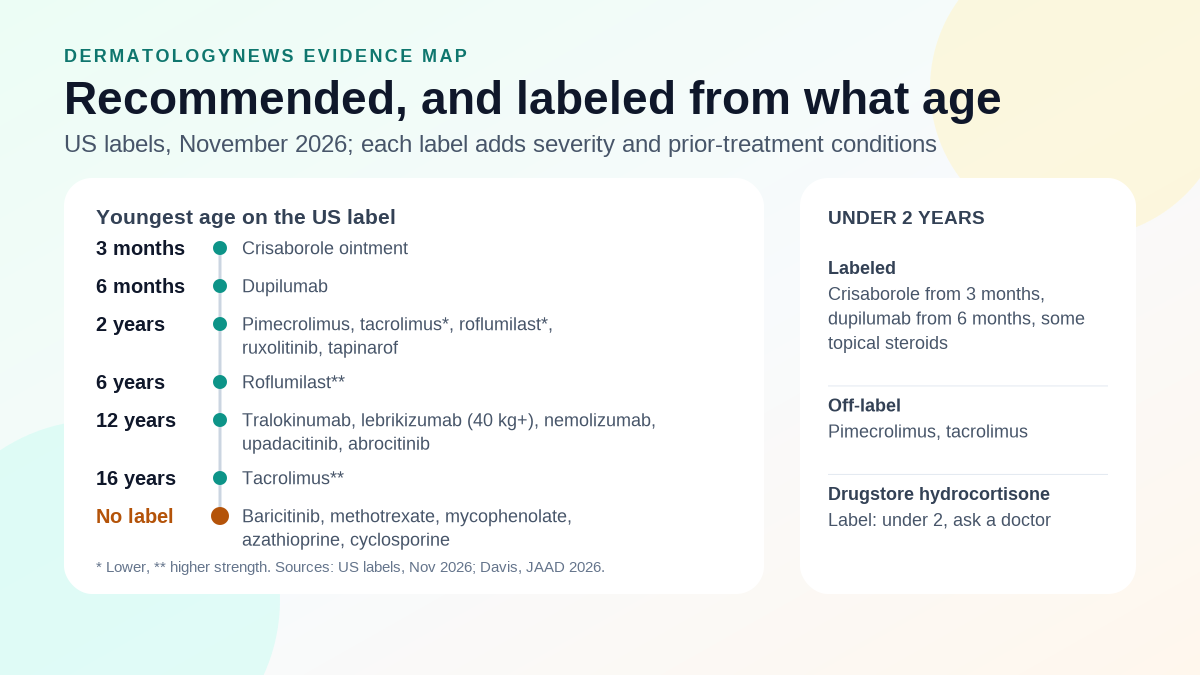
Babies under 2
Among the medicines the guideline names, those labeled for babies under 2 are some topical corticosteroids, crisaborole ointment from 3 months for mild to moderate eczema, and dupilumab from 6 months for moderate to severe eczema that prescription topical treatment does not control or for which it is unsuitable [3][4][10]. The guideline notes that there is less efficacy and safety data for dupilumab in children aged 6 months to under 2 years [2]. The dupilumab label's prescribing table for ages 6 months to 5 years covers children weighing 5 kg to under 30 kg [4]. It is an injection, and the AAD's advice for parents describes it as a home treatment that parents are taught to give [5].
The guideline strongly recommends the topical calcineurin inhibitors tacrolimus and pimecrolimus for children up to age 18, including proactive intermittent use as maintenance [2], and its evidence tables include trials of pimecrolimus in babies 3 to 23 months old [8]. Both US labels state that the medicines are not indicated for children under 2, so using them in a baby is off-label [12][13].
Children aged 2 to 11
From age 2, US labels add pimecrolimus 1% cream, the 0.03% strength of tacrolimus, roflumilast cream (0.05% to age 5, then 0.15%), ruxolitinib cream and tapinarof cream [12][13][14][15][16]. The calcineurin inhibitors and ruxolitinib cream are labeled for short-term and non-continuous chronic use in children whose immune system is not weakened, when other prescription topical treatments have not worked or are not advisable [12][13][15]. Of the injected medicines the guideline names, dupilumab is the only one recommended and labeled for eczema under 12 [2][4].
Adolescents from 12
The guideline recommends tralokinumab, lebrikizumab and nemolizumab, and the JAK inhibitor tablets upadacitinib, abrocitinib and baricitinib, from age 12 for moderate to severe eczema [2]. The labels of the three biologics add that prescription topical treatment has not controlled the eczema or is not advisable; lebrikizumab is labeled for children weighing at least 40 kg, and nemolizumab is used together with topical corticosteroids or calcineurin inhibitors [17][18][19]. The labels of upadacitinib and abrocitinib limit them to refractory eczema that other systemic drugs, including biologics, have not controlled, or when those drugs are inadvisable, and the guideline notes the same approval condition [2][20][21]. The November 2026 upadacitinib label removed the former 40 kg minimum weight for children with eczema [20].
Recommended but not labeled for eczema
Baricitinib is strongly recommended from age 12, but its US label lists rheumatoid arthritis, COVID-19 in hospitalized adults and severe alopecia areata, not atopic dermatitis; the guideline notes that its age range follows the FDA indications of other drugs in the same class [2][22]. Methotrexate carries a conditional recommendation from age 2 for moderate to severe eczema, and mycophenolate mofetil, azathioprine and cyclosporine conditional recommendations for refractory moderate to severe eczema, all with monitoring and the last two for limited-term use [2]. None of their US labels lists atopic dermatitis [23][24][25][26]. Using any of these medicines for eczema is off-label at every age in the US.
Topical corticosteroids: why the age differs by product
Topical corticosteroids are usually the first treatment for baby eczema, and the AAD calls them safe and effective when used appropriately [5]. The guideline considers them first-line in most cases because they are affordable and accessible, and it strongly recommends intermittent low to medium potency corticosteroids as maintenance [2][7].
Their labels set different ages by product and strength. The Drug Facts label of a hydrocortisone 1% cream sold without a prescription says not to use it in children under 2 and to ask a doctor, and not to use it for diaper rash [9]. Fluticasone propionate cream 0.05% may be used with caution from 3 months of age, and its safety beyond 4 weeks in children has not been established [10]. Clobetasol propionate cream, a super-high potency corticosteroid, is not recommended under 12 [11]. Children have more skin surface for their body weight than adults and are at greater risk of suppression of the body's own steroid hormones and of Cushing syndrome from topical corticosteroids [11]. The AAD lists swelling, color changes such as redness or light or dark spots, and rashes as signs that a corticosteroid may need to be stopped, and advises following the dermatologist's instructions [5]; questions about changing a prescribed corticosteroid go to the clinician who prescribed it.
Treatments the guideline advises against
- Systemic corticosteroids. The AAD advises against routine or long-term systemic corticosteroids for children with eczema, as a good practice statement rather than a graded recommendation [2]. A specialist may use them only for an acute, severe flare, as a short-term bridge to another systemic treatment, and not as maintenance [2]. Oral prednisone labels list severe or incapacitating atopic dermatitis that has not responded to adequate trials of conventional treatment, and the indication states no minimum age [27], so here the guideline is stricter than the label.
- Topical antimicrobials for eczema without signs of infection, conditionally against, on very low certainty evidence [2]. Eczema that looks infected is a different problem and needs a clinician [29].
- PUVA, light treatment combined with the medicine methoxsalen, conditionally against (very low certainty); the guideline advises avoiding it when other options are available because of its long-term risks, including skin cancer [2]. The methoxsalen label covers severe psoriasis, not eczema, and states that safety in children has not been established [28].
Can moisturizer prevent eczema in babies?
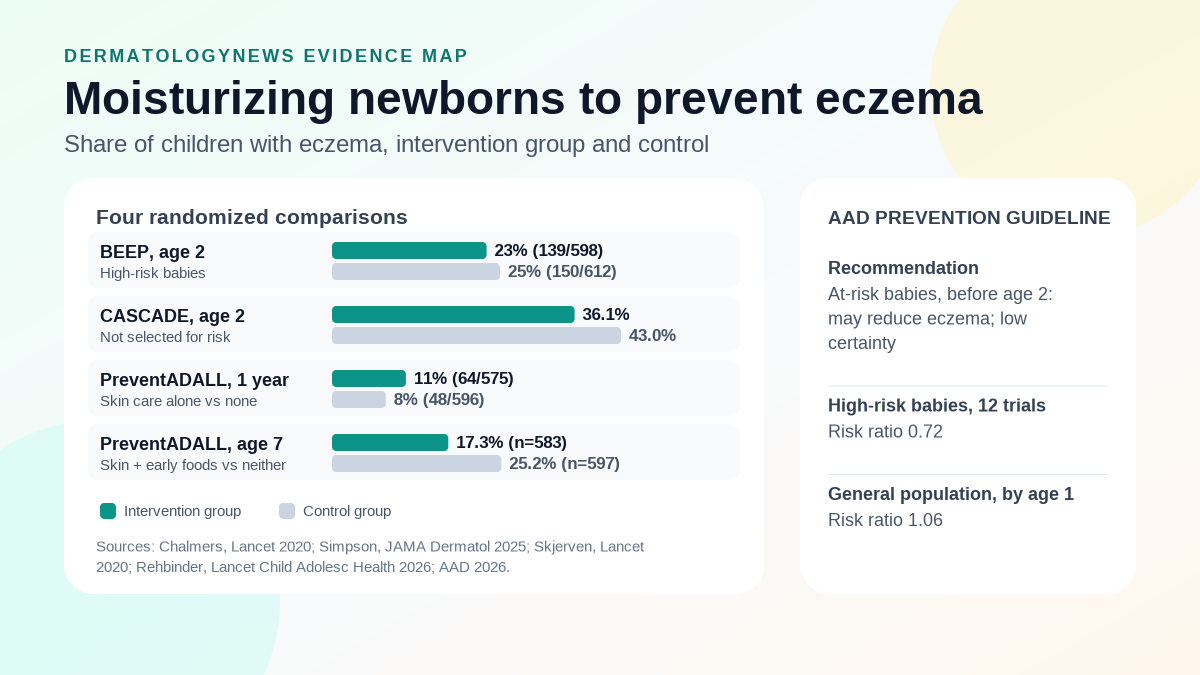
The prevention guideline states that regular moisturizing skin care before age 2 in children at risk of eczema may reduce the risk of developing it, a conditional recommendation on low certainty evidence, and that the evidence does not support a protective benefit in the general population [30]. This is separate from the strong recommendation to moisturize skin that already has eczema [2]. In the trials behind it, moisturizing began in the first days or weeks of life, and eczema was counted at 6 months to 2 years [31].
The guideline's pooled analysis gives these estimates [31]:
- Babies at high risk, 12 trials, 3,537 babies, eczema by 6 months to 2 years: 310 per 1,000 with standard care, against an estimated 223 per 1,000 with regular moisturizer (risk ratio 0.72, 95% CI 0.59 to 0.89). The certainty of this pooled outcome was rated high; the recommendation as a whole was rated low certainty [30][31].
- The general population, 3 trials, 1,937 babies: probably no reduction in eczema by age 1 (risk ratio 1.06, 0.65 to 1.74), moderate certainty.
- Skin infections, 8 trials: little or no difference (risk ratio 1.09, 0.91 to 1.31). Slips were rare in both groups.
Single trials point in different directions:
- BEEP, 1,394 UK newborns with a parent or sibling with eczema, hay fever or asthma, daily emollient for a year or standard skin care advice: no clear reduction in eczema at age 2, 23% (139 of 598) against 25% (150 of 612), adjusted relative risk 0.95 (0.78 to 1.16), and more skin infections in the first year with emollient (incidence rate ratio 1.55, 1.15 to 2.09) [32].
- CASCADE, 1,247 US infants not selected for risk, daily full-body moisturizer starting by 9 weeks of age or no moisturizer: fewer physician-diagnosed eczema cases by age 2, 36.1% against 43.0% (relative risk 0.84, 0.73 to 0.97), with no difference in skin side effects [33]. It is among the trials in the guideline's evidence tables [31].
- PreventADALL, 2,397 newborns from the general population in Norway and Sweden: regular oil baths and face cream from 2 weeks of age did not reduce eczema by 12 months; 11% of the skin-care-only group (64 of 575) had eczema, against 8% of the no-intervention group (48 of 596), and the risk difference for skin care was 3.1 percentage points (95% CI −0.3 to 6.5) in favor of no skin care [34]. Skin care alone also did not prevent eczema at age 3 [35].
- Cochrane 2022, individual participant data from earlier trials: skin care in infancy probably does not change the risk of eczema by age 1 to 3 (risk ratio 1.03, 0.81 to 1.31) and probably increases skin infections (risk ratio 1.33, 1.01 to 1.75), with no evidence that family risk changed the effect on eczema [36].
PreventADALL at age 7
The trial's 7-year results were published online on November 16, 2026, after the guidelines [35]. The 2,394 children had been assigned at birth to no intervention, skin care, early tastes of peanut, cow's milk, wheat and egg from 3 to 6 months of age, or both; the 3-month start was part of the research protocol, not feeding advice [35]. At age 7, eczema was less frequent in the group that had both skin care and early foods than in the group that had neither: 17.3% against 25.2% (risk difference −7.8 percentage points, 95% CI −12.5 to −3.2); the two groups had 583 and 597 children at randomization [35]. Eczema was a secondary outcome, and the main analysis counted children without data as free of atopic disease [35].
For food allergy, the trial compared the two groups assigned early foods with the two groups that were not. Diagnosed allergy to the four foods at age 7 showed no clear reduction: 17 of 1,224 children (1.4%) against 21 of 1,170 (1.8%) [35]. Fewer of the children tested were sensitized, meaning they had a positive skin prick or blood test to those foods: 67 of 680 (9.9%) against 95 of 610 (15.6%) [35]. A positive test is not the same as a diagnosed food allergy [37].
Early foods, breast milk, probiotics and vitamin D
The AAD found no demonstrated eczema-prevention benefit from early food introduction or breastfeeding (very low certainty), or from probiotic or vitamin D supplements (low certainty) [30]. These findings concern eczema prevention only; families can keep to their usual feeding and the supplement plan their clinician has set, and allergy societies still recommend breastfeeding for all mothers [30][37]. The AAD also notes that baby eczema is not caused by food and that finding a single food trigger rarely clears it, although children with eczema are more likely to develop a food allergy [5].
Early feeding has a separate purpose in food allergy, and families of babies with severe eczema or egg allergy should discuss peanut with the pediatrician or an allergist before the first peanut feeding. The 2017 US addendum guidelines recommend that infants with severe eczema, egg allergy or both have age-appropriate peanut-containing food introduced as early as 4 to 6 months, with evaluation by peanut-specific IgE or skin prick testing strongly considered first, and that infants with mild to moderate eczema have it introduced around 6 months [38]. A 2021 consensus of US and Canadian allergy societies advises introducing peanut-containing foods and cooked egg to all infants around 6 months, not before 4 months and once the baby is developmentally ready for solid foods, and states that screening before introduction is not required, although some families may prefer it [37].
When should a baby with eczema see a doctor?
- Possible eczema herpeticum, even without fever. Rapidly worsening, painful eczema, clusters of blisters that look like early cold sores, or small punched-out sores can mean a widespread herpes simplex infection; it needs immediate medical care [29][39].
- Fever or flu-like symptoms with infected-looking skin. With a temperature of 100.4°F (38°C) or higher or flu-like symptoms, get immediate medical care [29].
- Signs of infection in a child who otherwise seems well. Honey-colored crusts, pus-filled blisters, reddish swollen bumps, or spreading redness or streaks: contact the child's dermatologist [29]. If wet wraps or a covered treatment are in use, pause them and contact the clinician before restarting [29].
- A rash that does not settle. If good skin care does not clear a rash that looks like eczema within a few days, the AAD advises seeing a dermatologist or pediatrician; cradle cap, psoriasis, yeast infections and other conditions can look like eczema [5].
Adverse events, limitations and realistic expectations
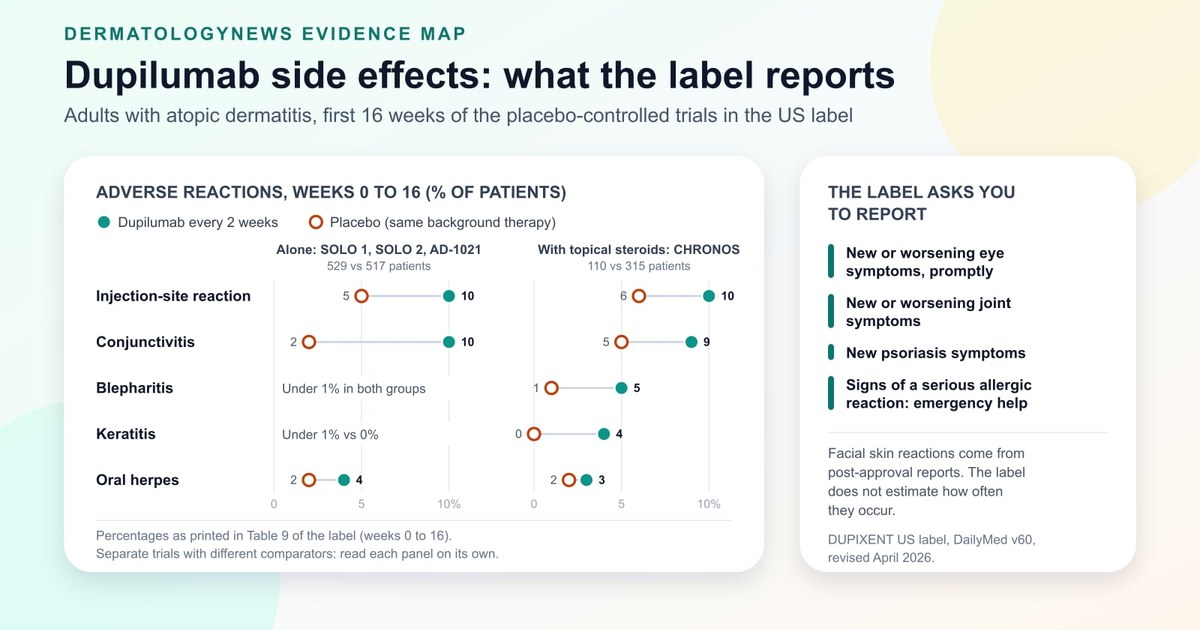
- Label warnings. Pimecrolimus and tacrolimus carry a boxed warning that their long-term safety has not been established: rare cases of skin cancer and lymphoma have been reported, without an established causal link, and continuous long-term use should be avoided [12][13]. Ruxolitinib cream and the JAK inhibitor tablets upadacitinib, abrocitinib and baricitinib carry boxed warnings for serious infections, death, cancer, major cardiovascular events and blood clots; the upadacitinib warning revised in November 2026 also names blood clots in the veins of the brain [15][20][21][22]. Several of the comparative findings behind these warnings come from adults with rheumatoid arthritis aged 50 or older with at least one cardiovascular risk factor, mostly treated with another JAK inhibitor; they are not risks measured in children with eczema [15][21][22]. The dupilumab label warns about conjunctivitis and keratitis, among other effects (dupilumab side effects) [4]. Application-site pain was the most common side effect of crisaborole [3].
- Short trials. Most randomized trials of eczema treatments are short, which limits conclusions about long-term benefit and safety [1].
- Prevention is uncertain. The trials differ in who was enrolled, what was applied and when eczema was counted, and moisturizing can bring more skin infections [31][32][36].
- The course varies. Many children outgrow eczema, but there is no way to know in advance whether a child's eczema will go away [5].
Questions to ask at the appointment
- Is this eczema, or could it be cradle cap, a yeast infection or another rash [5]?
- Which moisturizer and bathing routine suits my baby's skin [5]?
- Is the cream or medicine you suggest labeled for my child's age and eczema severity, and if not, why is it the right choice now?
- How long should we use the corticosteroid you prescribed, and which skin changes should I report to you [5]?
- Which signs of infection should make me call, and when do we need urgent care [29][39]?
- My baby has eczema: when and how should peanut be introduced, and is testing needed first [37][38]?
Bottom line
The AAD's first pediatric eczema guidelines strongly recommend moisturizers and topical corticosteroids at every age, with topical calcineurin inhibitors, crisaborole ointment and three newer creams, and, for moderate to severe eczema, dupilumab from 6 months and three other biologics and three JAK inhibitor tablets from 12 years [2]. For babies under 2, US labels cover some topical corticosteroids, crisaborole from 3 months and dupilumab from 6 months [3][4][10]. Moisturizing newborns may lower the chance of eczema in babies at higher risk, on low certainty evidence, and the trials disagree [30][32][33][36].
Common questions
- What do the 2026 AAD guidelines recommend for baby eczema?
- They strongly recommend moisturizers and topical corticosteroids for children of every age, and the topical calcineurin inhibitors tacrolimus and pimecrolimus [2]. For babies, crisaborole ointment is recommended from 3 months for mild to moderate eczema and dupilumab from 6 months for moderate to severe eczema [2]. Roflumilast, ruxolitinib and tapinarof creams start at age 2, and the other biologics and the JAK inhibitor tablets at age 12 [2]. The guidelines advise against routine or long-term systemic corticosteroids [2].
- Which eczema medicines are approved for babies under 2?
- Among the medicines the guideline names, US labels cover some topical corticosteroids, crisaborole ointment from 3 months for mild to moderate eczema, and dupilumab from 6 months for moderate to severe eczema that prescription topical treatment does not control or for which it is unsuitable [3][4][10]. Pimecrolimus and tacrolimus are labeled from age 2, so their use in a baby is off-label [12][13].
- Can I use hydrocortisone cream on my baby's eczema?
- The Drug Facts label of a hydrocortisone 1% cream sold without a prescription says not to use it in children under 2 and to ask a doctor, and not to use it for diaper rash [9]. The AAD calls topical corticosteroids the usual first treatment for baby eczema and safe and effective when used appropriately, following the dermatologist's instructions [5]. Questions about changing a prescribed corticosteroid go to the clinician who prescribed it.
- Does moisturizing a newborn prevent eczema?
- Not reliably. The AAD's 2026 prevention guideline states that regular moisturizing before age 2 in children at risk of eczema may reduce the risk of developing it, on low certainty evidence, and that the evidence does not support a benefit in the general population [30]. Trials disagree: BEEP found no clear reduction at age 2 and more skin infections, while CASCADE found fewer cases by age 2, 36.1% against 43.0% [32][33].
- Should a baby with eczema start solid foods early?
- Not to prevent eczema: the AAD found no demonstrated eczema-prevention benefit from early food introduction [30]. Peanut allergy prevention is different, and families of babies with severe eczema or egg allergy should discuss peanut with the pediatrician or an allergist before the first peanut feeding. The 2017 US addendum guidelines recommend peanut-containing food as early as 4 to 6 months for these infants, with testing strongly considered first [38]; a 2021 allergy society consensus advises peanut and cooked egg around 6 months, not before 4 months, without required screening [37].
References
- Davis DMR, Alikhan A, Bercovitch L, et al. Guidelines of care for the management of atopic dermatitis in pediatric patients. — Journal of the American Academy of Dermatology, 2026;95(1):121.e1-121.e26 (published online April 7, 2026) · PMID: 41949508 · DOI: 10.1016/j.jaad.2026.02.113
- American Academy of Dermatology. Management of atopic dermatitis in pediatric patients: summary of recommendations. — Guideline summary created by Guideline Central in participation with the American Academy of Dermatology; guideline published April 7, 2026, page last updated November 18, 2026
- EUCRISA (crisaborole) ointment, 2%, for topical use. US Prescribing Information. — Pfizer, FDA-approved labeling via DailyMed (U.S. National Library of Medicine); SPL version 13, published September 25, 2025
- DUPIXENT (dupilumab) injection, for subcutaneous use. US Prescribing Information. — Sanofi-Aventis U.S., FDA-approved labeling via DailyMed (U.S. National Library of Medicine); SPL version 60, published August 7, 2026
- American Academy of Dermatology. Signs your baby has eczema and how to treat it. — American Academy of Dermatology patient information, last updated October 27, 2026
- Sidbury R, Alikhan A, Bercovitch L, et al. Guidelines of care for the primary prevention of atopic dermatitis and awareness of comorbid conditions in pediatric atopic dermatitis. — Journal of the American Academy of Dermatology, 2026;95(1):124.e1-124.e19 (published online April 7, 2026) · PMID: 41949509 · DOI: 10.1016/j.jaad.2026.02.114
- American Academy of Dermatology. American Academy of Dermatology issues first-ever pediatric atopic dermatitis guidelines, highlighting prevention strategies and effective treatments. — American Academy of Dermatology news release, April 7, 2026
- American Academy of Dermatology. Supplemental material to the guidelines of care for the management of atopic dermatitis in pediatric patients: methods and evidence profiles. — Mendeley Data, version 1, January 23, 2026 (CC BY 4.0) · DOI: 10.17632/fc2965fjb2.1
- Hydrocortisone cream 1%, maximum strength anti-itch cream. Drug Facts label for a nonprescription product. — Padagis, US OTC Drug Facts labeling (OTC monograph M017) via DailyMed (U.S. National Library of Medicine); SPL version 9, published May 1, 2026
- Fluticasone propionate cream, 0.05%. US Prescribing Information. — Encube Ethicals, FDA-approved labeling via DailyMed (U.S. National Library of Medicine); SPL version 2, published November 17, 2025
- Clobetasol propionate cream, 0.05%. US Prescribing Information. — Lupin Pharmaceuticals, FDA-approved labeling via DailyMed (U.S. National Library of Medicine); SPL version 8, published November 17, 2025
- Pimecrolimus cream, 1%. US Prescribing Information. — Oceanside Pharmaceuticals, FDA-approved labeling via DailyMed (U.S. National Library of Medicine); SPL version 4, published May 21, 2026
- Tacrolimus ointment, 0.03% and 0.1%. US Prescribing Information. — E. Fougera & Co., FDA-approved labeling via DailyMed (U.S. National Library of Medicine); SPL version 13, published February 27, 2026
- ZORYVE (roflumilast) cream, for topical use. US Prescribing Information. — Arcutis Biotherapeutics, FDA-approved labeling via DailyMed (U.S. National Library of Medicine); SPL version 14, published August 3, 2026
- OPZELURA (ruxolitinib) cream, for topical use. US Prescribing Information. — Incyte, FDA-approved labeling via DailyMed (U.S. National Library of Medicine); revised June 2026, SPL version 14
- VTAMA (tapinarof) cream, 1%, for topical use. US Prescribing Information. — Organon, FDA-approved labeling via DailyMed (U.S. National Library of Medicine); SPL version 5, published November 19, 2026
- ADBRY (tralokinumab-ldrm) injection, for subcutaneous use. US Prescribing Information. — LEO Pharma, FDA-approved labeling via DailyMed (U.S. National Library of Medicine); SPL version 15, published December 19, 2025
- EBGLYSS (lebrikizumab-lbkz) injection, for subcutaneous use. US Prescribing Information. — Eli Lilly and Company, FDA-approved labeling via DailyMed (U.S. National Library of Medicine); SPL version 16, published October 5, 2026
- NEMLUVIO (nemolizumab-ilto) for injection, for subcutaneous use. US Prescribing Information. — Galderma Laboratories, FDA-approved labeling via DailyMed (U.S. National Library of Medicine); SPL version 5, published December 16, 2025
- RINVOQ (upadacitinib) extended-release tablets and RINVOQ LQ oral solution. US Prescribing Information. — AbbVie, FDA-approved prescribing information; revised November 2026
- CIBINQO (abrocitinib) tablets, for oral use. US Prescribing Information. — Pfizer, FDA-approved labeling via DailyMed (U.S. National Library of Medicine); SPL version 9, published September 11, 2026
- OLUMIANT (baricitinib) tablets, for oral use. US Prescribing Information. — Eli Lilly and Company, FDA-approved labeling via DailyMed (U.S. National Library of Medicine); SPL version 32, published October 22, 2026
- TREXALL (methotrexate) tablets, for oral use. US Prescribing Information. — Teva Women's Health, FDA-approved labeling via DailyMed (U.S. National Library of Medicine); SPL version 14, published June 29, 2026
- CELLCEPT (mycophenolate mofetil). US Prescribing Information. — Genentech, FDA-approved labeling via DailyMed (U.S. National Library of Medicine); SPL version 51, published August 10, 2026
- IMURAN (azathioprine) tablets. US Prescribing Information. — Sebela Pharmaceuticals, FDA-approved labeling via DailyMed (U.S. National Library of Medicine); SPL version 6, published November 17, 2025
- NEORAL (cyclosporine) capsules and oral solution. US Prescribing Information. — Novartis, FDA-approved labeling via DailyMed (U.S. National Library of Medicine); SPL version 30, published August 11, 2026
- Prednisone tablets. US Prescribing Information. — Amneal Pharmaceuticals, FDA-approved labeling via DailyMed (U.S. National Library of Medicine); SPL version 14, published July 6, 2026
- Methoxsalen capsules (soft gelatin). US Prescribing Information. — Strides Pharma Science, FDA-approved labeling via DailyMed (U.S. National Library of Medicine); SPL version 8, published June 25, 2026
- American Academy of Dermatology. Is that eczema or an infection on my child's skin? — American Academy of Dermatology patient information, accessed November 2026
- American Academy of Dermatology. Primary prevention of atopic dermatitis and awareness of comorbid conditions in pediatric atopic dermatitis: summary of recommendations. — Guideline summary created by Guideline Central in participation with the American Academy of Dermatology; guideline published April 7, 2026, page last updated November 18, 2026
- American Academy of Dermatology. Supplemental material to the guidelines of care for the primary prevention of atopic dermatitis and awareness of comorbid conditions in pediatric atopic dermatitis: methods and evidence profiles. — Mendeley Data, version 1, January 23, 2026 (CC BY 4.0) · DOI: 10.17632/zjfknbhhdd.1
- Chalmers JR, Haines RH, Bradshaw LE, et al. Daily emollient during infancy for prevention of eczema: the BEEP randomised controlled trial. — Lancet, 2020;395(10228):962-972 (funder: UK National Institute for Health Research) · PMID: 32087126 · DOI: 10.1016/S0140-6736(19)32984-8
- Simpson EL, Michaels LC, Ramsey K, et al. Emollients to prevent pediatric eczema: a randomized clinical trial. — JAMA Dermatology, 2025;161(9):957-965 (CASCADE; funder: US National Institute of Arthritis and Musculoskeletal and Skin Diseases) · PMID: 40699587 · DOI: 10.1001/jamadermatol.2025.2357
- Skjerven HO, Rehbinder EM, Vettukattil R, et al. Skin emollient and early complementary feeding to prevent infant atopic dermatitis (PreventADALL): a factorial, multicentre, cluster-randomised trial. — Lancet, 2020;395(10228):951-961 · PMID: 32087121 · DOI: 10.1016/S0140-6736(19)32983-6
- Rehbinder EM, Østberg Landaas V, Nordlund B, et al. Early food introduction and skin intervention in the prevention of food allergy in young children (PreventADALL): 7-year follow-up of a factorial, multicentre, cluster-randomised trial. — Lancet Child & Adolescent Health, 2026 (published online November 16, 2026) · PMID: 43039015 · DOI: 10.1016/S2352-4642(26)00241-5
- Kelleher MM, Phillips R, Brown SJ, et al. Skin care interventions in infants for preventing eczema and food allergy. — Cochrane Database of Systematic Reviews, 2022;11(11):CD013534 · PMID: 36373988 · DOI: 10.1002/14651858.CD013534.pub3
- Fleischer DM, Chan ES, Venter C, et al. A consensus approach to the primary prevention of food allergy through nutrition: guidance from the American Academy of Allergy, Asthma, and Immunology; American College of Allergy, Asthma, and Immunology; and the Canadian Society for Allergy and Clinical Immunology. — Journal of Allergy and Clinical Immunology: In Practice, 2021;9(1):22-43.e4 · PMID: 33250376 · DOI: 10.1016/j.jaip.2020.11.002
- Togias A, Cooper SF, Acebal ML, et al. Addendum guidelines for the prevention of peanut allergy in the United States: Report of the National Institute of Allergy and Infectious Diseases-sponsored expert panel. — Journal of Allergy and Clinical Immunology, 2017;139(1):29-44 · PMID: 28065278 · DOI: 10.1016/j.jaci.2016.10.010
- National Institute for Health and Care Excellence. Atopic eczema in under 12s: diagnosis and management. — NICE clinical guideline CG57, published December 12, 2007, last updated September 22, 2025