GLP-1 hair shedding: is it the drug or the weight loss?
Why some patients on semaglutide or tirzepatide notice hair shedding, what pharmacovigilance and review data show, the likely telogen effluvium mechanism, and how it is managed.
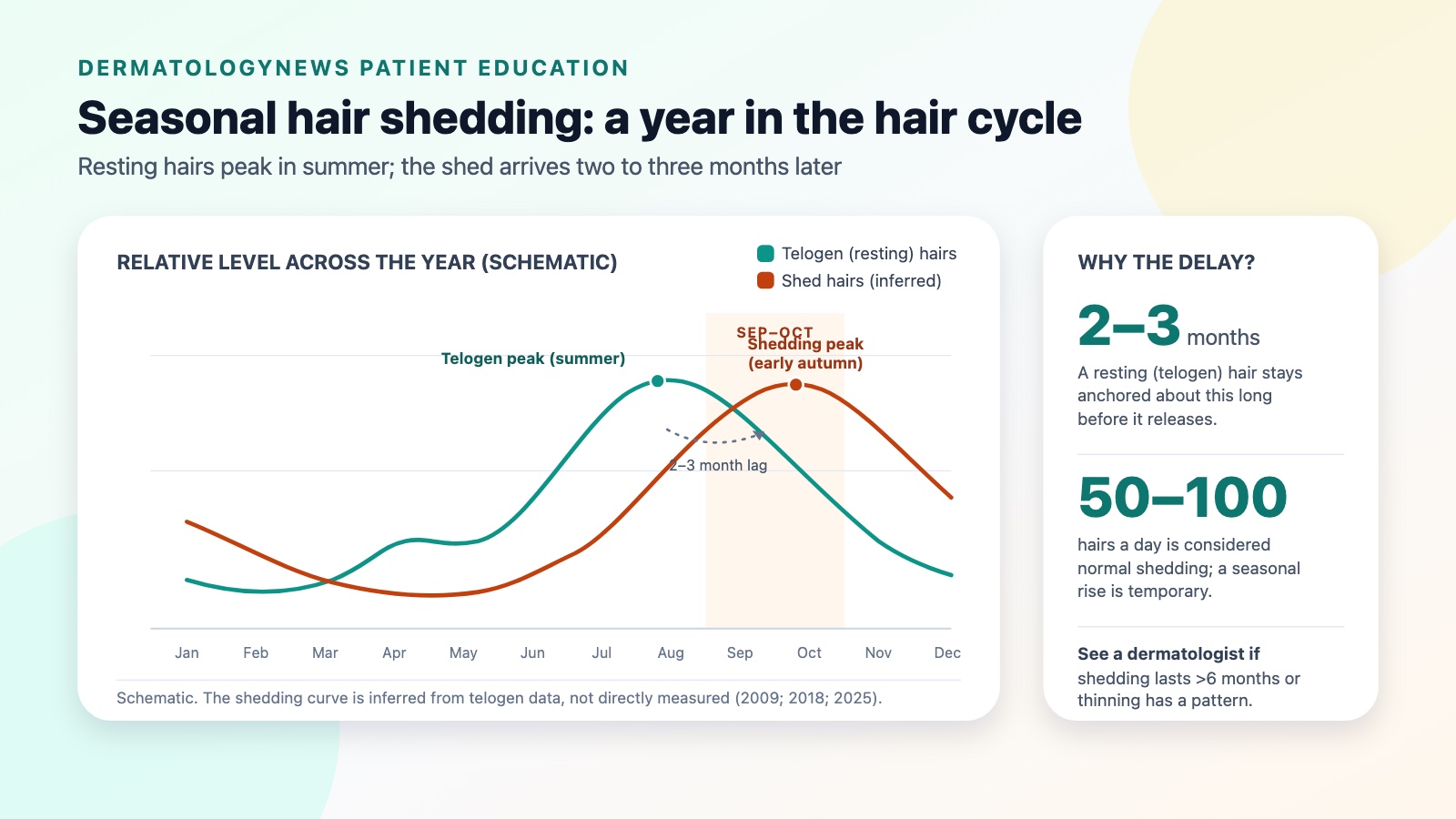
Some people taking GLP-1 receptor agonists such as semaglutide or tirzepatide notice increased hair shedding a few months into treatment. The current understanding is that this is usually telogen effluvium, a reversible form of diffuse shedding, and that the rapid weight loss driving it is the more likely trigger than the drug acting directly on the hair follicle [1][3]. Telogen effluvium pushes a larger-than-normal share of follicles into the resting phase, so hair sheds more heavily about two to four months after the trigger.
Why rapid weight loss can trigger shedding
Hair follicles cycle between growth (anagen), transition, and rest (telogen). A physiological stressor can shift many follicles into telogen at once. Rapid or large weight loss, lower calorie intake, and reduced protein and micronutrient intake are recognized triggers, and GLP-1 therapy reliably produces substantial weight reduction. In the 3-year SURMOUNT-1 analysis, mean weight change with tirzepatide reached about -19.7% at the highest dose, far beyond placebo [3]. The pharmacology of this drug class centers on appetite suppression and reduced energy intake [4], which is the same nutritional pathway long associated with telogen effluvium after dieting or bariatric procedures.
What the data actually show
A 2025 scoping review identified hair loss as an emerging reported adverse effect across semaglutide, liraglutide, tirzepatide, and dulaglutide. It found more than 1,000 spontaneous cases in the U.S. FDA Adverse Event Reporting System, and where a pattern was described, telogen effluvium and androgenetic alopecia were the most frequent subtypes [1]. The review stressed that most reports lacked dermatological confirmation and that a causal link is not established. A separate retrospective analysis of FDA reports listed alopecia among the five most common cutaneous reactions associated with this drug class [2]. Taken together, the signal is real enough to acknowledge but modest in frequency and uncertain in causation.
Timeline and what to expect
Shedding from a telogen effluvium trigger usually begins roughly two to four months after the trigger and is diffuse rather than patchy. Because follicles remain viable, regrowth is the expected course once the trigger resolves, which in this setting means weight stabilizing and nutrition becoming adequate [1]. Recovery often takes several months and may lag behind the moment a person feels their weight has settled.
How it is managed
Management focuses on the trigger rather than the follicle. Clinicians typically check for and correct contributing factors such as low protein intake, iron deficiency, and thyroid dysfunction, and they reassure patients that the shedding is usually self-limited. Adequate dietary protein during active weight loss is a reasonable, low-risk measure. Routine drug discontinuation is not generally required for telogen effluvium alone, and that decision belongs with the prescribing clinician. If loss is patchy, persistent beyond the expected window, or accompanied by scalp symptoms, a dermatology assessment helps rule out androgenetic alopecia or other causes.
Adverse events, limitations, and realistic expectations
The evidence base here is weak by design: most data come from spontaneous reports and reviews, not controlled dermatological studies, so frequency estimates are imprecise and causation is unproven [1][2]. Hair shedding can be distressing and may affect treatment adherence, which is one reason clinicians raise it proactively. Realistic expectations matter: regrowth is likely but not instant, and no supplement has been shown to speed recovery from telogen effluvium in this population. Anyone with rapid, patchy, or scarring hair loss needs individual evaluation rather than reassurance alone.
Bottom line
Hair shedding during GLP-1 therapy is uncommon, usually consistent with telogen effluvium, and most plausibly driven by rapid weight loss and reduced nutrition rather than a direct drug effect [1][3]. It is typically reversible. Attention to protein and micronutrient status, patience over several months, and dermatological review for atypical patterns are the practical priorities.
Common questions
- Does semaglutide or tirzepatide directly damage hair follicles?
- Current evidence does not show direct follicle injury. Most reported cases fit telogen effluvium, a reversible diffuse shedding usually triggered by the rapid weight loss and reduced calorie and protein intake that accompany treatment, rather than by a direct drug effect on the follicle [1][3].
- Will the hair grow back if I stay on the medication?
- In telogen effluvium the follicles stay alive and capable of regrowth. Shedding typically settles within a few months once weight stabilizes and nutrition is adequate. Persistent or patchy loss should be assessed by a dermatologist, because it may signal a different cause [1].
- How common is hair loss with these drugs?
- It is uncommon and varies by drug and indication. In weight-loss trials it has been reported more often than with placebo but still in a minority of patients, and pharmacovigilance databases hold a large number of spontaneous reports without confirmed causation [1][2].
References
- Rojas Lopez RF et al. Alopecia as an Emerging Adverse Effect Associated With GLP-1 Receptor Agonists for Weight Loss: A Scoping Review. — Cureus, 2025 · PMID: 40951222 · DOI: 10.7759/cureus.90021
- Daniel S et al. A Retrospective Comparative Analysis of Cutaneous Adverse Reactions in GLP-1 Agonist Therapies (FDA Adverse Event Reporting System). — Journal of Drugs in Dermatology, 2025 · PMID: 40196945 · DOI: 10.36849/JDD.8605
- Jastreboff AM et al. Tirzepatide for Obesity Treatment and Diabetes Prevention (SURMOUNT-1, 3-year). — New England Journal of Medicine, 2024 · PMID: 39536238 · DOI: 10.1056/NEJMoa2410819
- Moore PW et al. GLP-1 Agonists for Weight Loss: Pharmacology and Clinical Implications. — Advances in Therapy, 2022 · PMID: 36566341 · DOI: 10.1007/s12325-022-02394-w